Basic Specifications
Model NO.BIC-1059-V2.1
MaterialHydrocarbon Ceramic Woven Glass
Flame RetardantV0
Mechanical RigidRigid
ProcessingElectrolytic Foil
Base MaterialCopper
InsulationEpoxy Resin
BrandRogers
Surface FinishImmersion Gold (ENIG)
Board Thickness0.65mm (Finished)
Layer Count2-Layer
Solder MaskGreen
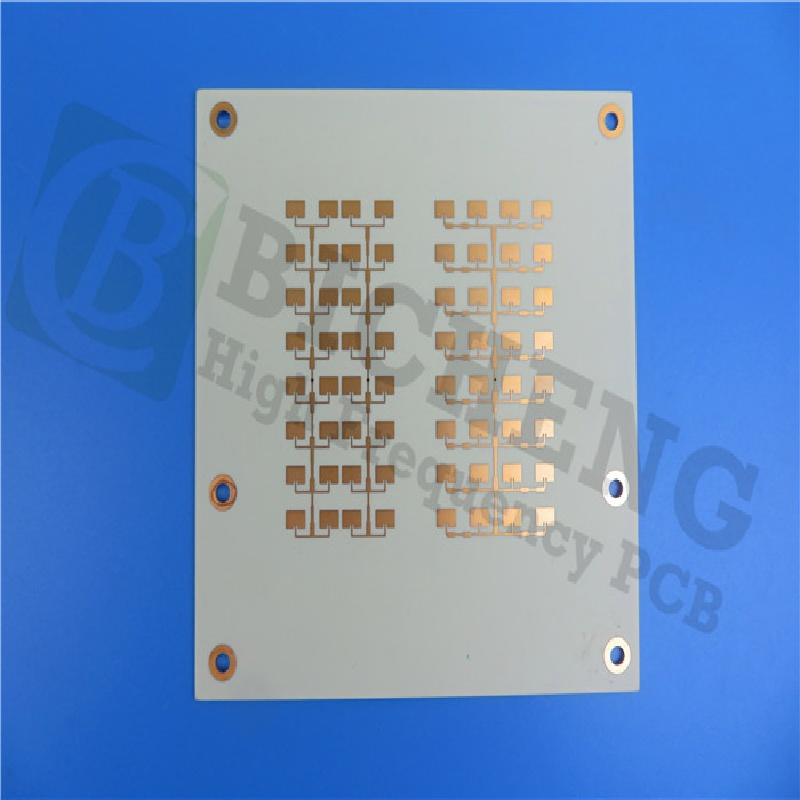
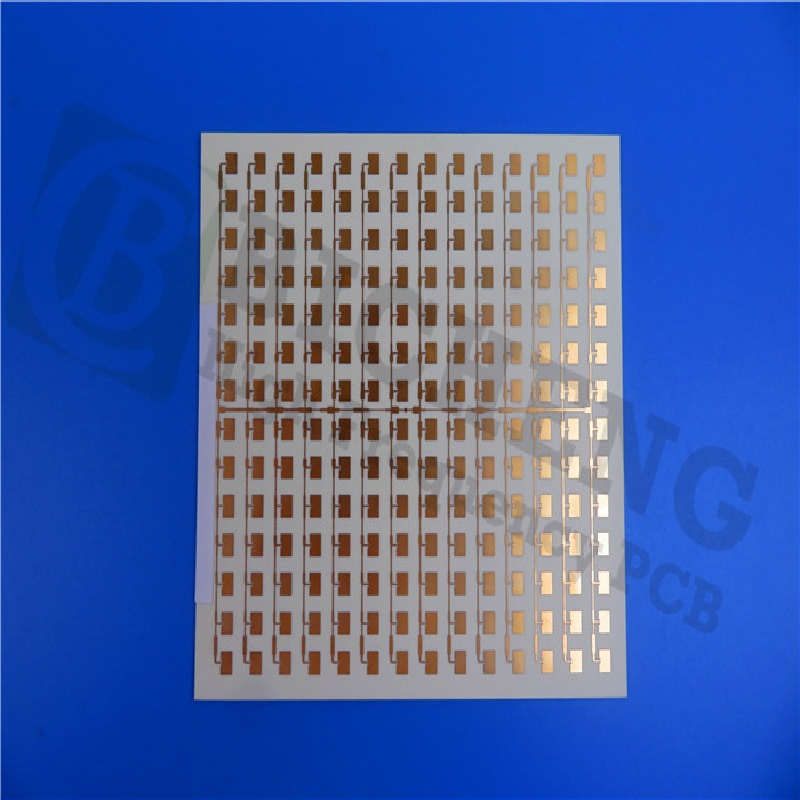
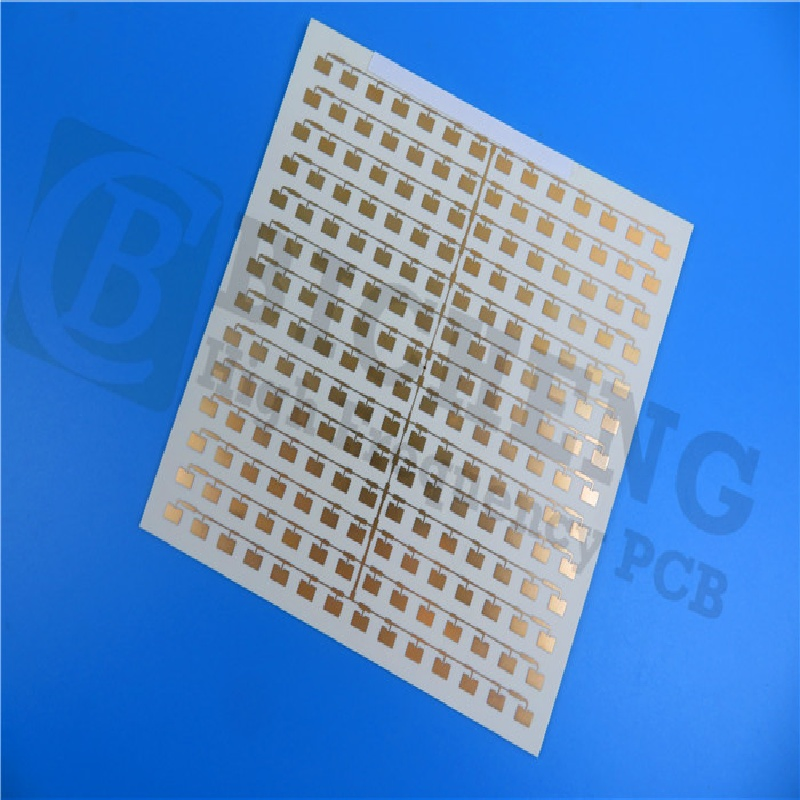
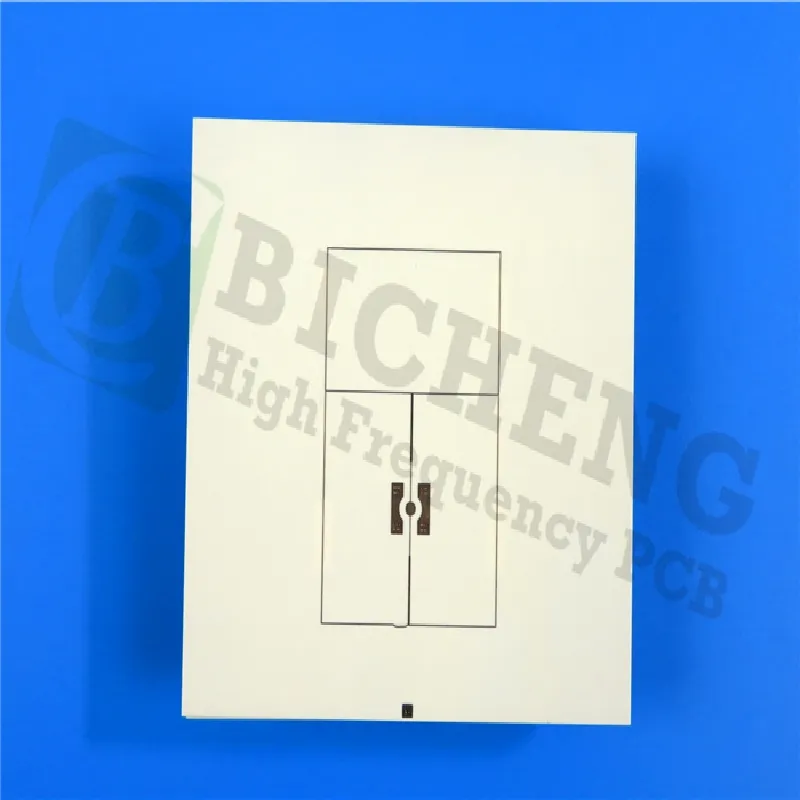
Specification178.25mm x 76.43mm
Production Capacity360,000 m²/Year
Product Description
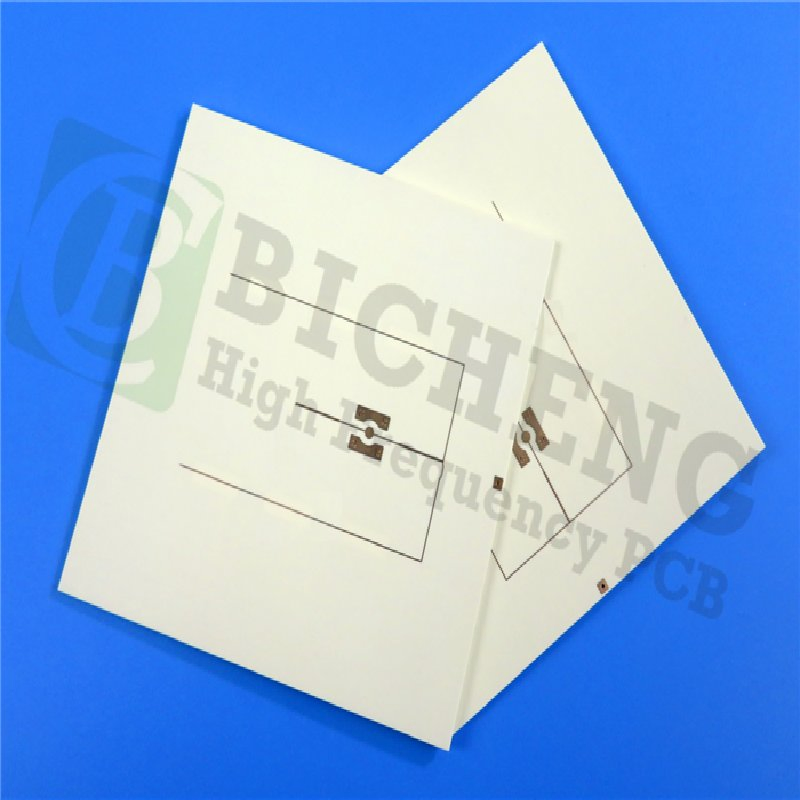
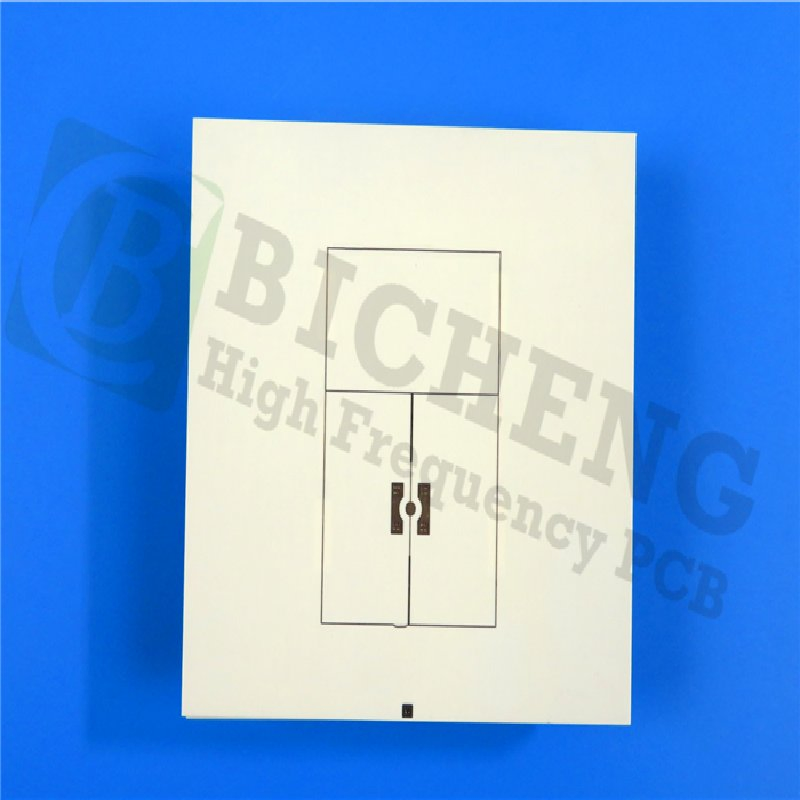
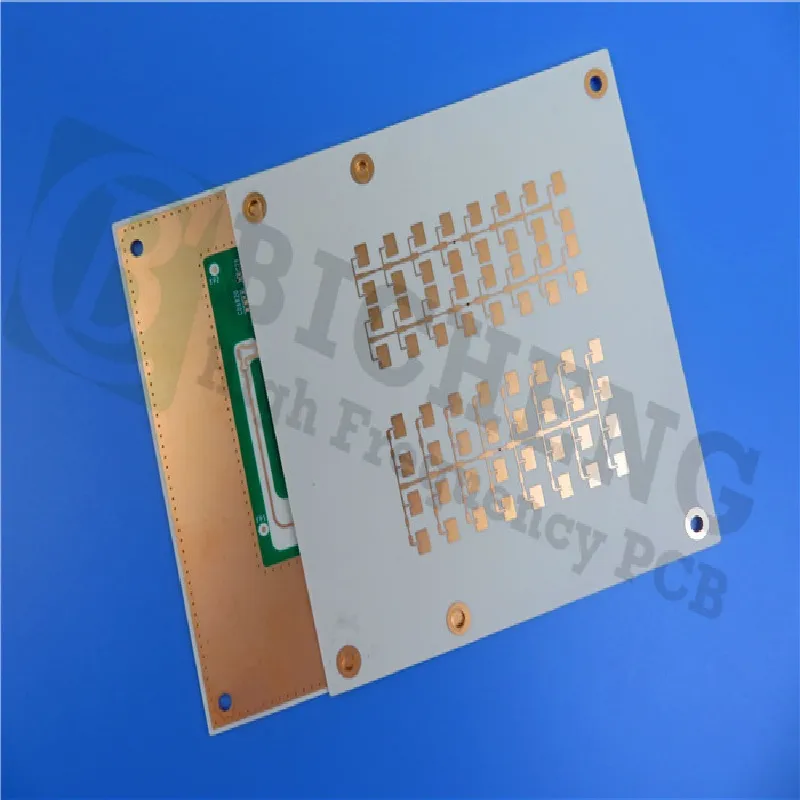
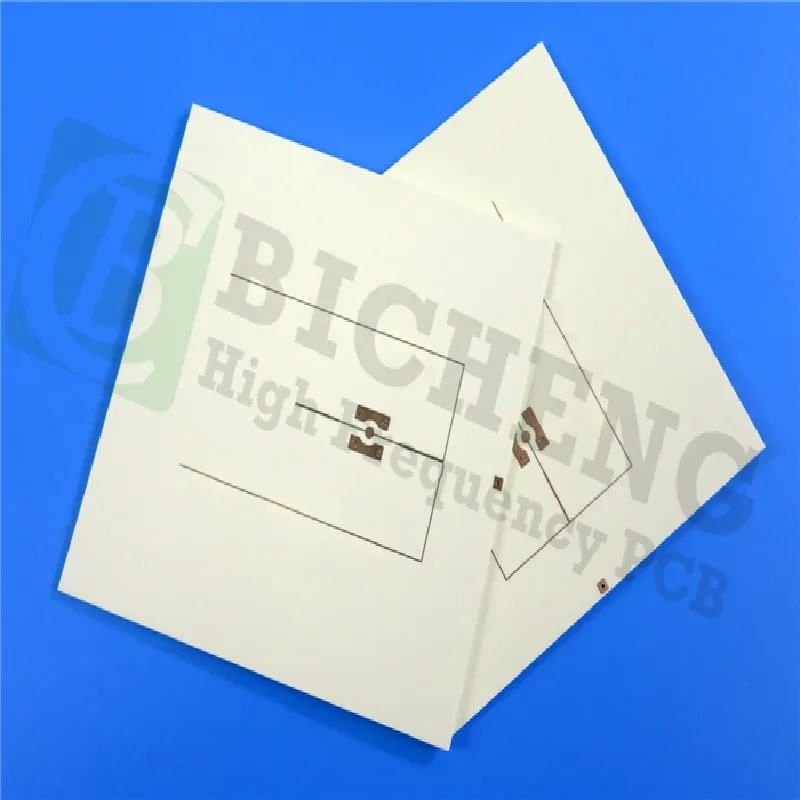
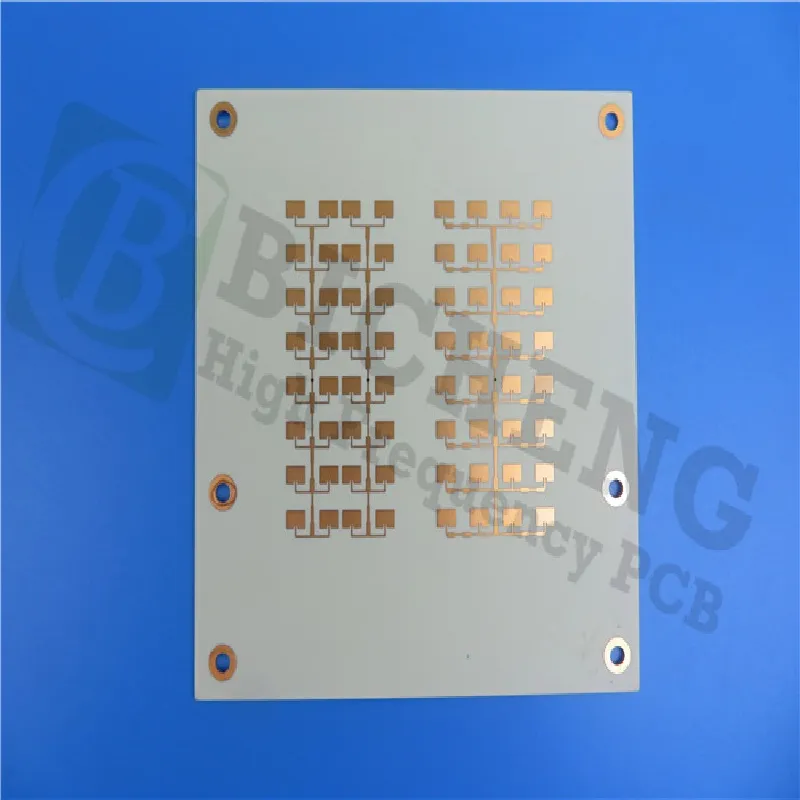
2-Layer Rogers RO4003C LoPro PCB with 0.65mm: High-Frequency Circuit Board for Digital & RF Applications
(All PCBs are custom-manufactured. Reference images and parameters may vary based on your design requirements.)
1. Overview of 2-Layer RO4003C LoPro PCB
The 2-Layer Rogers RO4003C LoPro PCB is a high-performance circuit board engineered for demanding RF, wireless, and high-speed digital applications. Built with Rogers' proprietary RO4003C LoPro laminates, this PCB delivers exceptional signal integrity, low conductor loss, and thermal stability. Its optimized design supports frequencies up to 40 GHz, making it ideal for cellular base stations, satellite communications, and advanced digital systems like servers and routers. With a slim 0.65mm thickness and ENIG surface finish, the board ensures reliability in harsh environments while meeting IPC-Class-2 standards.
2. PCB Construction Details
| Parameter |
Specification |
| Base Material | RO4003C LoPro Laminate |
| Layer Count | 2 Layers |
| Board Thickness | 0.65mm |
| Board Dimensions | 178.25mm x 76.43mm (±0.15mm) |
| Copper Weight | 1 oz (35 μm) |
| Minimum Trace/Space | 4/5 mils |
| Minimum Hole Size | 0.25mm |
| Surface Finish | Electroless Nickel Immersion Gold (ENIG) |
| Solder Mask | Green |
| Via Filling | Resin filled & capped (IPC-4761 Type VII) |
| Electrical Testing | 100% Tested Prior to Shipment |
3. Stackup Structure
➤Layer 1: 35 μm Copper
➤Substrate: 0.526mm RO4003C LoPro Core
➤Layer 2: 35 μm Copper
4. Material Advantages & Features
✔Low Signal Loss: Dielectric constant of 3.38 ±0.05 @ 10 GHz and ultra-low dissipation factor (0.0027) ensure minimal insertion loss.
✔Thermal Stability: Copper-matched CTE prevents delamination even under thermal shock.
✔High Reliability: Tg >280°C, thermal conductivity of 0.64 W/mK, and moisture absorption <0.06%.
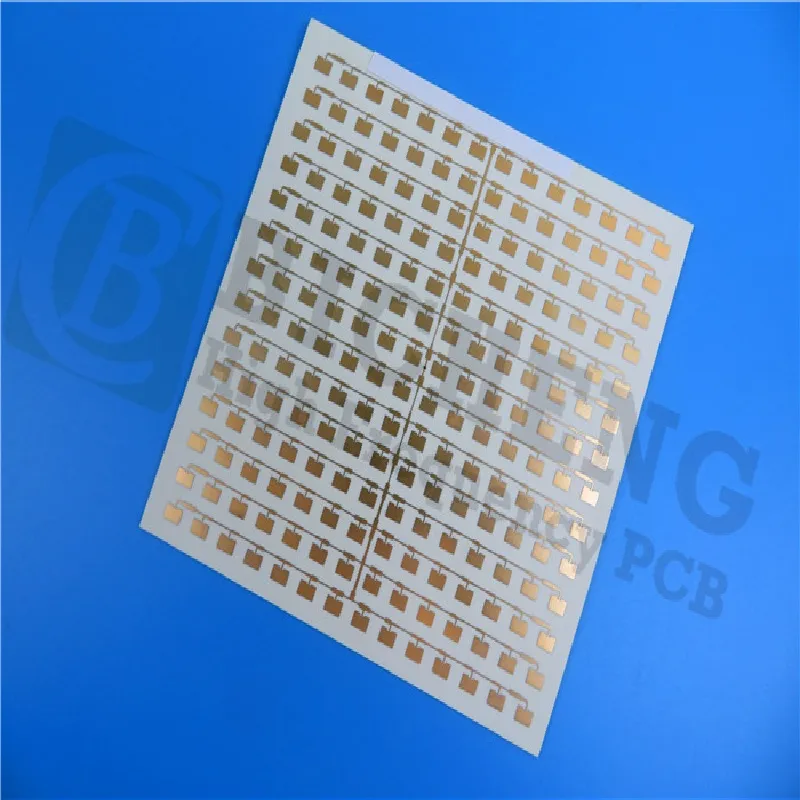
✔Design Density: Supports layouts with 148 vias, 163 pads, and 10 nets.
5. Typical Applications
- ✦RF & Wireless: Cellular base station antennas, satellite LNBs, RFID tags.
- ✦High-Speed Digital: Servers, routers, high-speed backplanes.
- ✦Automotive & Aerospace: Power amplifiers, radar systems.
Why Choose This PCB?
The 2-layer RO4003C LoPro PCB combines Rogers' advanced laminate technology with precision manufacturing. Its low Z-axis CTE ensures reliable plated through-holes, while the ENIG finish provides oxidation resistance for long-term performance. With compliance to IPC-Class-2 standards, it's the go-to solution for mission-critical designs optimized for speed, reliability, and cost-efficiency.
Tags: RO4003C LoPro PCB, 2-layer high-frequency circuit board, 0.65mm thickness PCB, ENIG surface finish, Rogers RO4003C laminate, RF applications, IPC-Class-2 PCB.
Frequently Asked Questions (FAQ)
Q1: What makes the RO4003C LoPro material special for RF applications?
A: It features a low dielectric constant (3.38) and an ultra-low dissipation factor (0.0027), which significantly reduces signal insertion loss at high frequencies up to 40 GHz.
Q2: What is the benefit of the ENIG surface finish on this PCB?
A: Electroless Nickel Immersion Gold (ENIG) provides a flat surface for components, excellent solderability, and superior oxidation resistance for long-term reliability.
Q3: Can this board handle thermal stress?
A: Yes, with a Tg higher than 280°C and a CTE matched to copper, it maintains excellent dimensional stability and prevents delamination during thermal cycling.
Q4: What are the typical lead times for RO4003C LoPro prototypes?
A: While standard production varies, the material is optimized for rapid prototyping to support fast-paced high-speed digital and RF development projects.
Q5: Is the via filling process used for this specific design?
A: Yes, it utilizes resin-filled and capped microvias (IPC-4761 Type VII) to enhance mechanical strength and support high-density routing.
Q6: What file formats are supported for manufacturing?
A: This manufacturing process is fully compatible with standard Gerber RS-274-X files for seamless production integration.